
Best Electric Rice Cooker for a Family of 4 in India

Our quick verdict
Best overall for most families of four: Panasonic SR-Y22FHS (2.2 L, non-stick pan, steaming basket).
Big rice eaters or frequent guests: Prestige PRWO 2.8-2 or V-Guard VRC 2.8 C (2-year product warranty).
Want steel, not aluminium or non-stick: Prestige Cute 2.8-2 SS.
Inverter homes or set-and-forget cooking: AGARO Regal (500 W, 24-hour timer).
The best electric rice cooker for a family of 4 in India is usually a 2.2 to 2.8 litre model with an automatic switch to keep-warm, a pot material you are comfortable with, and a long warranty on the heating plate. That size cooks one generous meal for four people with room to spare for a guest or a second helping, without being so large that small batches burn or dry out.
This guide is built from manufacturer specifications, the listings on Amazon.in and patterns in published buyer feedback. We have not used these cookers ourselves. Below are six picks, a sizing rule and notes for Indian conditions.
If you are still deciding between a rice cooker and the stovetop, our guide to the best pressure cooker for a family of 4 covers the other half of that choice.
Quick picks
| Product | Best for | Key feature |
|---|---|---|
| Panasonic SR-Y22FHS | Most families of four | 2.2 L, 750 W, non-stick pan, steaming basket |
| Prestige PRWO 2.8-2 | Rice-heavy meals, guests | 2.8 L, 1000 W, two aluminium pans |
| V-Guard VRC 2.8 C | Longest product warranty here | 2-year product, 5-year heating plate cover |
| Prestige Cute 2.8-2 SS | Families avoiding aluminium | Two stainless steel pans |
| AGARO Regal | Inverter homes, timed cooking | 500 W, fuzzy logic, 24-hour preset |
| CUCKOO CR-0675FG | Premium, many rice types | 6-cup Micom, 13 menu options |
1. Panasonic SR-Y22FHS: best electric rice cooker for a family of 4
A classic one-lever automatic cooker: it cooks, then drops to keep-warm on its own. The 2.2 litre size fits a family of four well, and the compact body suits a crowded counter.
- Capacity: 2.2 litres
- Power: 750 W
- Pan: non-stick coated (Panasonic calls it Anchor Coat)
- Keep-warm: up to 5 hours, as listed
- In the box: steaming basket, spatula, starch separator
Pros: right-sized for four, compact footprint, non-stick pan is easy to wash, steaming basket included, and a long-running model line with wide service support.
Cons: the non-stick coating needs the supplied plastic spatula and gentle washing to last; only one pan, so you cannot cook back-to-back batches as quickly as with twin-pan models.
Who should skip this: households that want an uncoated steel pot, or that regularly cook rice for more than five or six people in one go.
2. Prestige PRWO 2.8-2: best for big appetites and guests

The Prestige PRWO is one of the most common rice cookers in Indian homes. The "-2" in the name means it comes with two cooking pans, so one batch can be served while the next one cooks. Prestige lists a raw capacity of 1.7 litres and a cooked capacity of 2.8 litres.
It suits families who eat rice at both meals or often cook for relatives.
- Capacity: 2.8 litres cooked, 1.7 litres raw (as listed)
- Power: 1000 W
- Pans: two aluminium pans with a close-fit stainless steel lid
- Warranty: 1 year on product, 5 years on heating plate
- Detachable cord, cool-touch handles, keep-warm mode
Pros: large capacity, twin pans, Prestige service centres are easy to find in most districts.
Cons: aluminium pans are not ideal for storing sour dishes such as lemon rice or tamarind rice; a 2.8 litre cooker can be wasteful for very small batches.
Who should skip this: a family of four with light rice eaters, or anyone who wants a steel or coated pan.
3. V-Guard VRC 2.8 C: best warranty for a large-family rice cooker

V-Guard's 2.8 litre cooker is very similar in idea to the Prestige above: big capacity, 1000 W, two pans. The difference that matters is the warranty. V-Guard lists 2 years on the product and 5 years on the heating plate, which is the longest product cover among the picks here.
- Capacity: 2.8 litres (V-Guard says up to 10 cups of rice)
- Power: 1000 W, 230 V
- Pans: two aluminium pots, stainless steel lid with steam vent
- Body: double-layer outer body, cool-touch handles, anti-skid feet
- In the box: rice separator, measuring cup, spatula, detachable cord
- Warranty: 2 years product, 5 years heating plate
Pros: longest product warranty in this list, rice separator for draining starch, two pots for back-to-back batches.
Cons: aluminium pots; bulky for small kitchens.
Who should skip this: anyone short of counter space, or families who only cook small portions of rice.
4. Prestige Cute 2.8-2 SS: best stainless steel rice cooker

For families who prefer steel to aluminium or non-stick, the Cute 2.8-2 SS has two stainless steel pans and a steel lid, in the same 2.8 litre size as the PRWO.
- Capacity: 2.8 litres
- Power: 1000 W
- Pans: two stainless steel pans, close-fit stainless steel lid
- Keep-warm mode, cool-touch handles, detachable cord
Pros: steel pans are durable, scrub-friendly and do not react with sour foods; twin pans.
Cons: rice sticks to bare steel more than to non-stick, so soak the pan before washing; steel versions usually cost more than aluminium ones.
Who should skip this: anyone who wants the easiest possible washing, since a non-stick pan is quicker to clean.
5. AGARO Regal: best digital rice cooker for inverter homes

The AGARO Regal is a digital cooker with fuzzy logic, which means it adjusts heat and time as it senses how the rice is cooking. It has preset programmes, a 24-hour preset timer and a long keep-warm, so you can set it at night and wake up to cooked rice or porridge.
Its 500 W rating is half that of the 2.8 litre mechanical cookers here. That makes it the easiest fit on a home inverter.
- Bowl: 3 litre, 5-layer ceramic-coated inner bowl
- Power: 500 W, 230 V
- Programmes: white rice, brown rice, short grain, two "low carb" modes, plus porridge, steam and slow cook
- 24-hour preset timer, up to 12 hours keep-warm
- In the box: stainless steel steaming basket, measuring cup, spatula, ladle
Pros: low wattage, timer, presets, steaming basket.
Cons: the listing gives raw-rice capacity as up to 750 g in one place and 600 g in another, so plan around the lower figure; digital cooking takes longer than a 1000 W mechanical cooker; treat any health claims for the "low carb" modes with caution.
Who should skip this: families who want the fastest possible cook, or who prefer a simple lever with no electronics to fail.
6. CUCKOO CR-0675FG: premium pick for different rice types
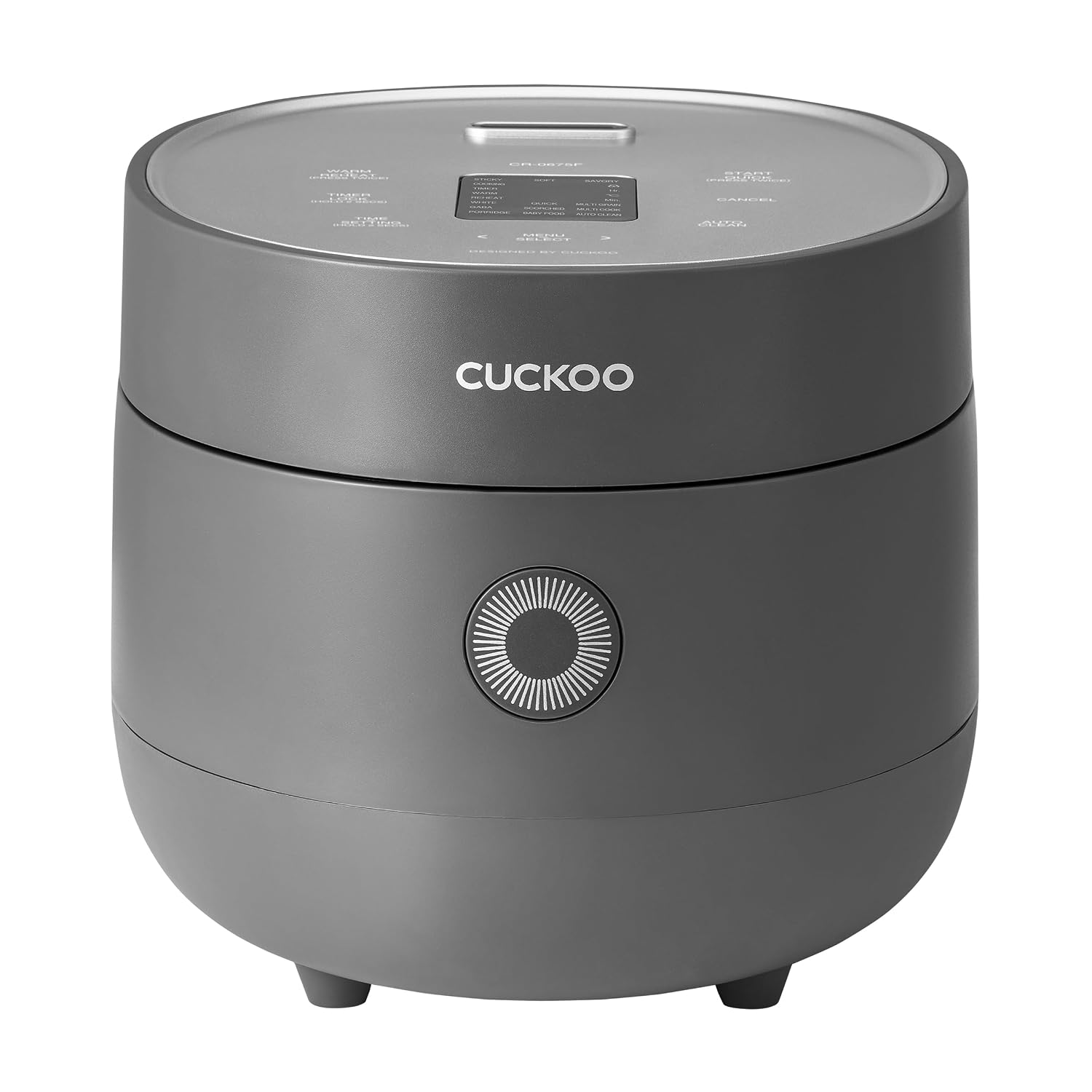
CUCKOO is a Korean brand known mainly for rice cookers. The CR-0675FG is a 6-cup (12 cups cooked) Micom model with fuzzy logic, 13 menu options and three texture settings. It suits homes that cook several grains, from brown rice to porridge and oats.
- Capacity: 6 cups raw, 12 cups cooked (CUCKOO's own cup)
- Pot: removable non-stick inner pot, detachable inner lid
- 13 menu options, 3 texture choices, auto-clean function
- Country of origin: Korea; warranty: 1 year, as listed
Pros: fuzzy-logic cooking with programmes for many rice types, easy-clean design.
Cons: costs much more than the Indian mechanical models; use CUCKOO's own measuring cup and pot markings; service reach outside large cities is not as wide as Prestige, Panasonic or V-Guard.
Who should skip this: families who mostly cook plain white or parboiled rice the traditional way and do not need many programmes.
Electric rice cooker for 4 persons in Indian homes: what really matters
Power cuts and inverter use
A 1000 W cooker draws a lot from a home inverter. Many household inverters are rated around 700 to 1100 VA, which supplies a bit less than that in watts, and that capacity is shared with fans and lights. If you want to cook rice during outages, the 500 W AGARO Regal is the easier fit. With a 1000 W model, cook before scheduled cuts or check your inverter's rating first.
Voltage swings
All picks are rated for 230 V. Plug them straight into a properly earthed wall socket rather than a cheap multi-plug, since a 1000 W load can overheat thin extension boards. Low voltage simply means longer cooking times.
Hard borewell water
Hard water leaves white marks on pans. Remove them with a mild vinegar or lemon rinse, then wash normally. Do not leave the acidic rinse sitting in aluminium pans. Steel pans like the Prestige Cute SS handle scrubbing best.
Humid coastal cities
In Mumbai, Chennai, Kochi or Kolkata, moisture matters. Always wipe the outside of the pan dry before placing it on the heating plate, and keep the heating plate clean and dry. A detachable cord, as on the Prestige and V-Guard models, makes this easier.
Parboiled and matta rice
Kerala matta and other parboiled rice need more water and longer cooking, and many families drain the excess starch water. Open-type cookers with a rice separator, such as the V-Guard VRC and the Panasonic with its starch separator, suit this style better than sealed digital cookers.
Small kitchens and service reach
The Panasonic and AGARO take the least counter space. Outside metros, Prestige, Panasonic and V-Guard have the widest service networks here.
How to choose a rice cooker for a family of 4 in India
Size: what capacity do you need?
Rice roughly doubles to triples in volume as it cooks. A common rule of thumb is about 75 to 100 g of raw rice per adult per meal, more in rice-centred homes. For four people that is roughly 300 to 500 g per meal. A 1.8 litre cooker handles that for light eaters. A 2.2 litre model gives comfortable headroom, and 2.8 litres makes sense if you cook lunch and dinner together or host often. Cooking much less than a quarter of the capacity can dry out or brown the bottom layer.
Pot material: aluminium, non-stick, ceramic or steel?
Aluminium heats quickly and is cheap, but health agencies such as Health Canada advise against storing acidic or very salty food in uncoated aluminium. Non-stick and ceramic coatings are easy to clean but need soft tools. Stainless steel is the most durable and inert, but rice sticks more.
Mechanical or digital?
Mechanical cookers (a lever and a thermostat) are fast, cheap and easy to repair. Digital fuzzy-logic cookers add timers, programmes and gentler cooking, but take longer and have electronics that may need a service centre.
Wattage and electricity use
A 1000 W cooker running for 20 to 25 minutes uses roughly 0.35 to 0.4 units of electricity per batch, plus a little more on keep-warm.
Keep-warm and food safety
Keep-warm helps with staggered meals but is not storage. Eat rice within a few hours and refrigerate leftovers soon, since cooked rice left warm for long can grow bacteria.
Warranty, service and certification
Look for at least 1 year on the product and a longer warranty on the heating plate, which is the part most likely to fail. Check the listing or box for BIS/ISI certification details. Also see how far your nearest service centre is before choosing a less common brand. If power cuts are frequent where you live, our guide to the best inverters for home use explains how VA rating affects what you can run.
Popular options we left out, and why
Panasonic SR-WA18 (1.8 L): a reliable smaller sibling of our top pick, but at 1.8 litres it leaves little headroom for a family of four with big appetites or guests.
Thermal cookers (choodarapetty): popular in Kerala, they finish cooking with stored heat after a stovetop boil. Useful, but not automatic electric cookers.
Pigeon Easy 3L: a budget twin-pot model with a steamer, but it showed very limited stock on Amazon.in when we researched this guide.
Useful add-on

Washing rice in a coated cooker pan can scratch it. The BERGNER 2-in-1 stainless steel colander and mixing bowl (26 cm, 3.6 litres) lets you rinse rice and dal separately and drain it cleanly before it goes into the cooker.
Frequently asked questions
What size rice cooker do I need for a family of 4?
A 2.2 litre cooker suits most families of four. Choose 1.8 litres for light eaters, and 2.8 litres if rice is the main dish at every meal or you often have guests.
What size rice cooker do I need for a family of 6?
Go for 2.8 litres or more. Twin-pan models like the Prestige PRWO 2.8-2 or V-Guard VRC 2.8 C help when you need back-to-back batches.
Which brand rice cooker is best for daily use?
Panasonic, Prestige and V-Guard suit daily use thanks to simple designs and wide service networks. Choose by size, pot material and warranty first.
Is an electric rice cooker good for health?
An electric rice cooker cooks rice the same way as a pot; it does not make rice healthier or unhealthier by itself. Portion size and the type of rice matter more. Avoid storing sour food in aluminium pans and replace coated pans once the coating peels.
Which rice cooker is best, steel or aluminium?
Steel is more durable and does not react with sour foods, but rice sticks more. Aluminium heats fast and is cheaper. If you store rice dishes in the pan, steel is the safer choice.
Rice cooker vs pressure cooker: which is better?
A pressure cooker is faster and handles dal and curries too. A rice cooker gives fluffier, separate grains, needs no watching and keeps rice warm.
How much electricity does a rice cooker use?
A 1000 W model cooking for about 20 to 25 minutes uses roughly 0.35 to 0.4 units. A 500 W digital model draws less power but cooks for longer.
Conclusion
For most households, the Panasonic SR-Y22FHS is the best electric rice cooker for a family of 4 in India: right-sized, simple and easy to service. Choose the Prestige PRWO 2.8-2 or V-Guard VRC 2.8 C if you cook large amounts, the Prestige Cute 2.8-2 SS if you want steel pans, the AGARO Regal if you rely on an inverter or want a timer, and the CUCKOO CR-0675FG if you cook many kinds of grain and want premium features.
Related guides on Deals Market
- induction cooktop guide for Indian cooking – pairs well with a rice cooker in gas-free or small kitchens.
- best air fryer for a family of 4 – sizing advice for the same household size.
- how to choose a mixer grinder – the other appliance every Indian kitchen relies on daily.
Browse more: Kitchen guides
Disclosure: Deals Market may earn a commission when you buy through links on this page, at no extra cost to you. Prices and availability are set by Amazon and can change.
Prices, coupons and stock change often and are set by the retailer. Please confirm the final price on the store’s checkout page before you buy.